Green Light Therapy
Green light therapy is a cutting-edge, non-invasive treatment that uses specific wavelengths of green light to promote healing, reduce pain, improve mood, and restore natural sleep rhythms.
Unlike harsher forms of light exposure, green light is gentle on the eyes and body, yet clinically shown to deliver powerful therapeutic effects—making it an ideal option for individuals suffering from chronic migraines, fibromyalgia, circadian rhythm imbalances, or mood disorders.
With no known side effects and growing support from peer-reviewed research, green light therapy offers a safe, natural alternative to medication-based interventions.
Discover the Healing Power of Green Light Therapy
Green light therapy is an emerging, drug-free solution offering profound benefits for people struggling with pain, migraines, poor sleep, and mood disorders. Backed by a growing body of clinical and neuroscientific research, this gentle yet powerful therapy harnesses specific wavelengths of green light (typically around 525nm) to rebalance your body’s natural rhythms and ease discomfort—without side effects.
What Is Green Light Therapy?
Green light therapy involves exposure to a controlled spectrum of green light emitted from LED sources. Unlike conventional white or blue light, green light has been shown to stimulate the brain and body in unique, beneficial ways. It works through both visual and non-visual pathways—interacting with the brain’s internal clock (circadian system), pain processing centres, and mood-regulating structures.
Proven Benefits of Green Light Therapy
1. Pain Reduction Without Drugs
In a University of Arizona clinical trial, fibromyalgia patients reported significant pain relief after just 10 weeks of daily green light exposure—with no side effects.
Green light was shown to increase natural opioids in the body and reduce neuroinflammation, making it highly promising for chronic and post-surgical pain.
2. Migraine Relief
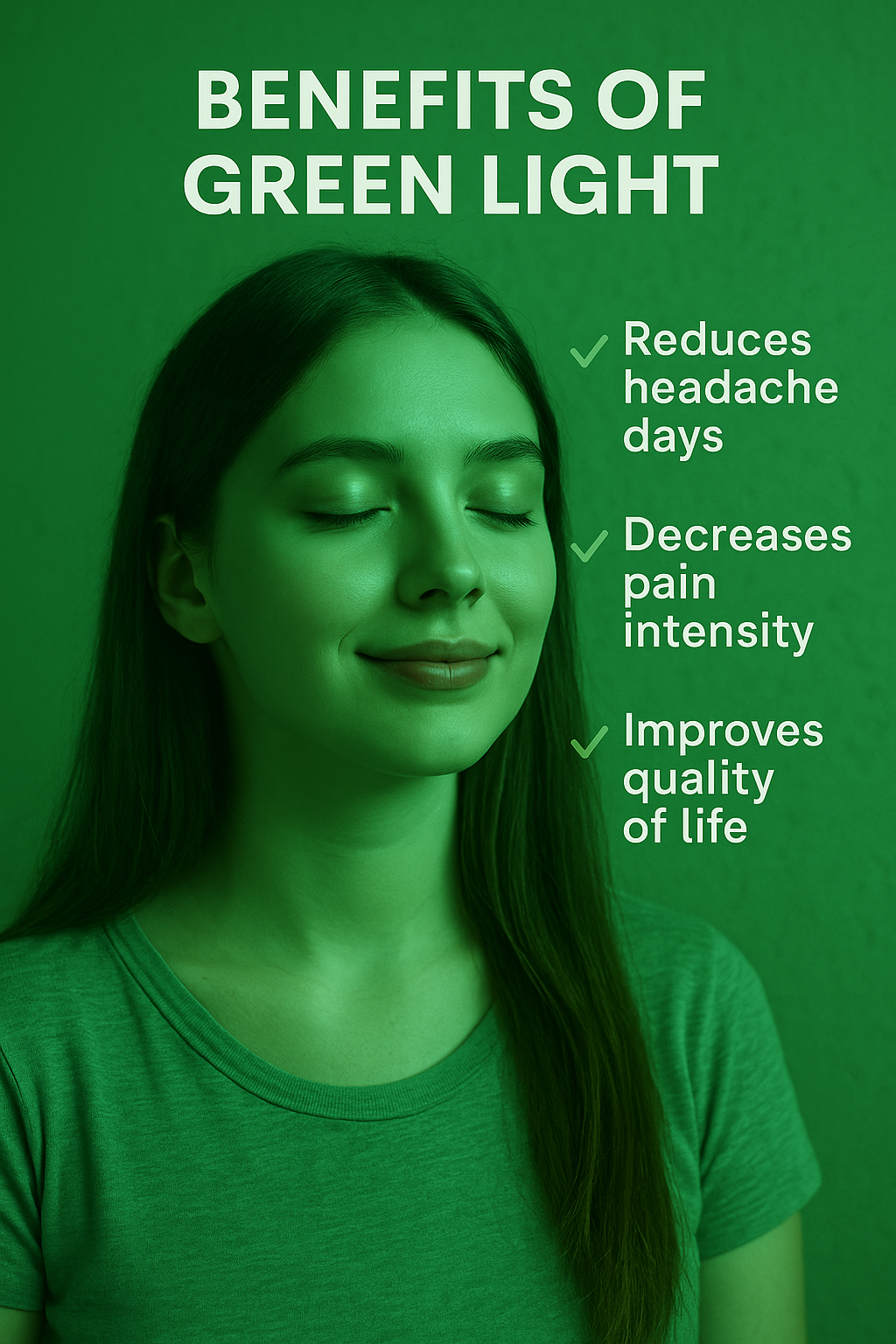
Chronic migraine sufferers experienced up to 12.9 fewer headache days per month following green light therapy. Pain intensity scores dropped from 8.0 to 3.2 on a 10-point scale.
3. Enhanced Mood and Circadian Rhythm Balance
Green light influences the brain's mood-regulating centres such as the hypothalamus and prefrontal cortex through non-visual retinal pathways.
It helps realign the circadian clock—improving sleep quality, alertness, and overall emotional well-being.
4. No Known Adverse Effects
Across multiple studies, green light therapy demonstrated a strong safety profile with no measurable side effects—even with daily use.
Is It Right for You?
Green light therapy is suitable for:
Individuals with chronic pain (e.g. fibromyalgia, migraines, arthritis)
People experiencing poor sleep or irregular circadian rhythms
Those seeking a natural, non-pharmacological mood support tool
Patients with post-operative pain looking to reduce reliance on opioids
Research Studies
1. Evaluation of Green Light Exposure on Headache Frequency and Quality of Life in Migraine Patients
Year: 2021
Authors: Ibrahim et al.
Summary: Green light-emitting diodes (GLED) significantly reduced headache days and pain intensity in both episodic and chronic migraine patients, improving quality of life.
2. Green Light Improves Pain and Quality of Life in Fibromyalgia Patients: A Preliminary One-Way Crossover Clinical Trial
Year: 2020
Authors: Martin et al.
Summary: Patients with fibromyalgia experienced a 42% reduction in pain and enhanced sleep and functional outcomes after GLED exposure.
3. Effects of Green Color Exposure on Stress, Anxiety, and Pain During Peripheral Intravenous Cannulation
Year: 2021
Authors: Takemura et al.
Summary: Exposure to green color significantly lowered stress biomarkers and pain perception during IV procedures in dental patients.
4. Green Light Exposure Elicits Anti-Inflammation, Endogenous Opioid Release and Dampens Synaptic Potentiation to Relieve Post-Surgical Pain
Year: 2023
Authors: Martin et al.
Summary: GLED therapy reduced postoperative pain and inflammation while enhancing endogenous opioid response in a preclinical human-relevant model.
5. Anti-Inflammatory Effect of Green Photobiomodulation in Human Adipose-Derived Mesenchymal Stem Cells
Year: 2022
Authors: Tamimi et al.
Summary: Green light (532 nm) exposure significantly downregulated inflammatory gene expression in human stem cells.
6. Bright Green Light Treatment of Depression for Older Adults
Year: 2005
Authors: Kripke et al.
Summary: Although underpowered, this study found bright green light was well tolerated and improved mood in elderly patients with depression.
7. Photobiomodulation Review: Under the Spotlight – Mechanisms of Blue and Green Light
Year: 2020
Authors: Serrage et al.
Summary: 75% of studies reviewed reported therapeutic benefits from green light, including inflammation reduction and improved tissue function.
8. Green LED Light Improves Sleep Quality and Decreases Fatigue in Patients with Chronic Pain (Referenced in Review)
Year: 2023 (referenced in Ibrahim et al. review)
Authors: Porreca, Ibrahim et al.
Summary: GLED exposure in chronic pain patients improved sleep onset, maintenance, and fatigue levels.
9. Green Light and Reduced Photophobia in Migraine
Year: 2016
Authors: Noseda et al.
Summary: Green light was the only wavelength that did not exacerbate—and actually improved—photophobia in migraine sufferers.